
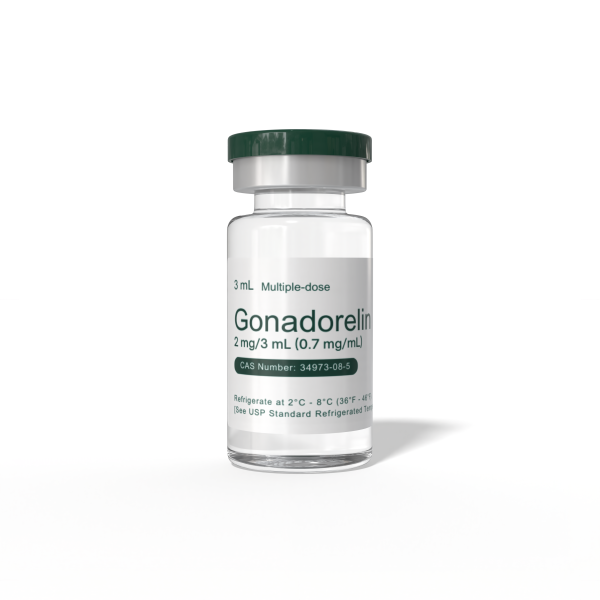
Gonadorelin is a synthetic decapeptide medication that is identical in chemical structure to the endogenous gonadotropin-releasing hormone (GnRH). It is primarily used to regulate reproductive functions by stimulating the pituitary gland to release luteinizing hormone (LH) and follicle-stimulating hormone (FSH).
Common Uses
- Diagnostic Testing: Used to evaluate the functional capacity of the pituitary gland. A single injection can help determine if a patient has a gonadotropin deficiency due to hypothalamic or pituitary failure.
- Fertility Treatment: In women, it is used to induce ovulation, particularly when the hypothalamus does not release enough natural GnRH. In men, it can treat hypogonadotropic hypogonadism to stimulate testosterone and sperm production.
- Veterinary Medicine: Widely used in livestock (cattle, swine, horses) to synchronize estrus, treat ovarian cysts, and improve conception rates.
Mechanism of Action
- Pulsatile vs. Continuous: When administered in pulses (mimicking natural rhythm), it stimulates the release of LH and FSH. However, continuous or high-dose administration leads to “down-regulation” of pituitary receptors, eventually suppressing the production of sex hormones.
- Short Half-Life: It has a very short terminal half-life of approximately 10 to 40 minutes and is rapidly metabolized.
Side Effects and Risks
- General: Common side effects include headache, nausea, abdominal pain, and injection site reactions (redness or swelling).
- Severe (OHSS): In women undergoing fertility treatment, it can cause Ovarian Hyperstimulation Syndrome (OHSS), characterized by severe stomach pain, bloating, and rapid weight gain.
- Men’s Health: While often used alongside Testosterone Replacement Therapy (TRT) to maintain testicular function, its effectiveness varies based on dosing frequency.
Reviews
There are no reviews yet.