
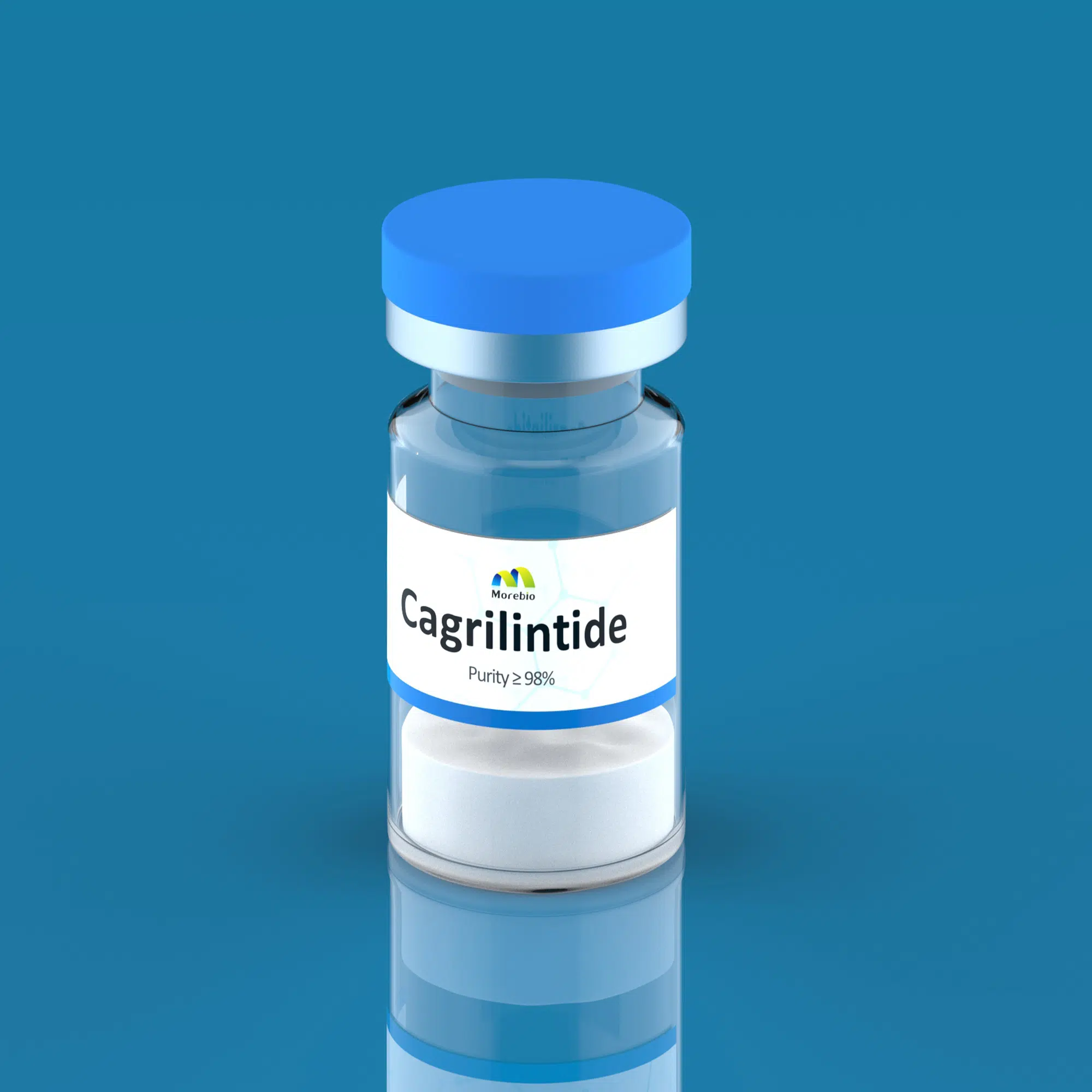
Cagrilintide is an investigational, long-acting amylin analogue developed by Novo Nordisk for the treatment of obesity and type 2 diabetes. It mimics the hormone amylin, which is naturally secreted by the pancreas to signal satiety and regulate appetite.
Mechanism of Action
Cagrilintide works differently than common GLP-1 medications like Ozempic or Wegovy:
- Satiety Signaling: It binds to amylin receptors in the brain to reduce hunger and increase feelings of fullness.
- Gastric Emptying: It slows the rate at which the stomach empties, helping to prolong satiety after meals.
- Receptor Affinity: It has high affinity for amylin receptors (AMY1R, AMY2R, and AMY3R) and the calcitonin receptor.
Clinical Use and “CagriSema”
Cagrilintide is most often studied in combination with semaglutide (a GLP-1 receptor agonist). This fixed-dose combination is known by the investigational name CagriSema.
- Synergistic Effect: Combining these two different pathways—amylin and GLP-1—has shown more significant weight loss than using either drug alone.
- Trial Results: In the REDEFINE 1 phase 3 trial (results published in 2025), CagriSema led to an average weight loss of approximately 22.7% to 23% over 68 weeks.
- Comparison: As of early 2026, research suggests CagriSema may offer weight loss results comparable to or potentially exceeding current market leaders like tirzepatide (Mounjaro/Zepbound).
Current Status (as of 2026)
- Approval: Cagrilintide is not yet FDA-approved for commercial use as of January 2026.
- Timeline: The manufacturer has indicated plans to submit for FDA approval in early 2026 following successful late-stage clinical trials.
- Administration: It is designed for once-weekly subcutaneous injection.
- Side Effects: The most common side effects are gastrointestinal, including nausea, vomiting, and diarrhea, which are typically mild to moderate in severity.

Reviews
There are no reviews yet.