
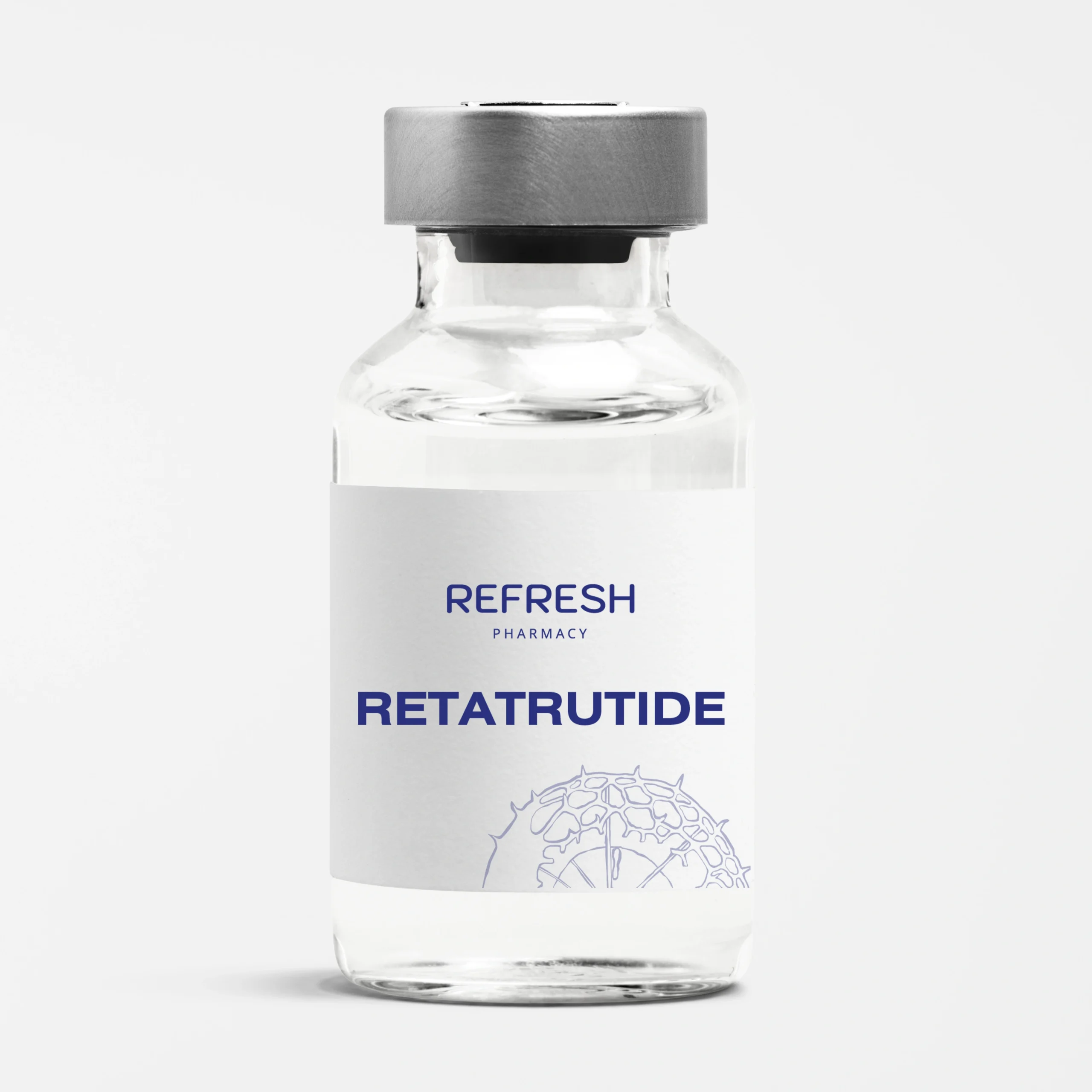
Retatrutide (LY3437943) is Retatrutide (LY3437943) is an experimental once-weekly injectable medication being developed by Eli Lilly and Company for the treatment of obesity, type 2 diabetes, and metabolic liver disease.
Key Characteristics and Mechanism
Retatrutide is a triple hormone receptor agonist, often nicknamed the “triple G” because it targets three different metabolic pathways simultaneously:
GLP-1 (Glucagon-like peptide-1): Suppresses appetite and slows digestion.
GIP (Glucose-dependent insulinotropic polypeptide): Enhances insulin secretion and plays a role in fat metabolism.
Glucagon: Increases the amount of energy and fat the body burns while regulating glucose production.
Clinical Efficacy
In late-stage clinical trials as of late 2025 and early 2026, retatrutide has demonstrated record-breaking weight loss results:
Weight Loss: Phase 2 data showed an average weight loss of up to 24.2% (nearly 60 lbs) over 48 weeks at the highest dose (12 mg).
Liver Fat: A 24-week substudy found that 86% of participants on the highest dose achieved normal liver fat levels (<5%), indicating significant potential for treating MASH (metabolic dysfunction-associated steatohepatitis).
Other Benefits: Successful Phase 3 trials have also shown substantial relief from knee osteoarthritis pain and improvements in blood pressure and lipid levels.
Status and Availability (2026)
FDA Approval: As of January 2026, retatrutide is not yet FDA-approved. Full approval and commercial availability are currently anticipated for late 2026 or early 2027.
Clinical Trials: Phase 3 trials (the TRIUMPH program) are ongoing and expected to wrap up by May 2026.
Access: Currently, the only legal way to receive the medication is through participation in a registered clinical trial.
Side Effects: The most common adverse effects are gastrointestinal (nausea, vomiting, diarrhea) and are generally dose-related.
Retatrutide is a triple hormone receptor agonist, often nicknamed the “triple G” because it targets three different metabolic pathways simultaneously:
GLP-1 (Glucagon-like peptide-1): Suppresses appetite and slows digestion.
GIP (Glucose-dependent insulinotropic polypeptide): Enhances insulin secretion and plays a role in fat metabolism.
Glucagon: Increases the amount of energy and fat the body burns while regulating glucose production.
Clinical Efficacy
In late-stage clinical trials as of late 2025 and early 2026, retatrutide has demonstrated record-breaking weight loss results:
Weight Loss: Phase 2 data showed an average weight loss of up to 24.2% (nearly 60 lbs) over 48 weeks at the highest dose (12 mg).
Liver Fat: A 24-week substudy found that 86% of participants on the highest dose achieved normal liver fat levels (<5%), indicating significant potential for treating MASH (metabolic dysfunction-associated steatohepatitis).
Other Benefits: Successful Phase 3 trials have also shown substantial relief from knee osteoarthritis pain and improvements in blood pressure and lipid levels.
Status and Availability (2026)
FDA Approval: As of January 2026, retatrutide is not yet FDA-approved. Full approval and commercial availability are currently anticipated for late 2026 or early 2027.
Clinical Trials: Phase 3 trials (the TRIUMPH program) are ongoing and expected to wrap up by May 2026.
Access: Currently, the only legal way to receive the medication is through participation in a registered clinical trial.
Side Effects: The most common adverse effects are gastrointestinal (nausea, vomiting, diarrhea) and are generally dose-related.
Key Characteristics and Mechanism
Retatrutide is a triple hormone receptor agonist, often nicknamed the “triple G” because it targets three different metabolic pathways simultaneously:
- GLP-1 (Glucagon-like peptide-1): Suppresses appetite and slows digestion.
- GIP (Glucose-dependent insulinotropic polypeptide): Enhances insulin secretion and plays a role in fat metabolism.
- Glucagon: Increases the amount of energy and fat the body burns while regulating glucose production.
Clinical Efficacy
In late-stage clinical trials as of late 2025 and early 2026, retatrutide has demonstrated record-breaking weight loss results:
- Weight Loss: Phase 2 data showed an average weight loss of up to 24.2% (nearly 60 lbs) over 48 weeks at the highest dose (12 mg).
- Liver Fat: A 24-week substudy found that 86% of participants on the highest dose achieved normal liver fat levels (<5%), indicating significant potential for treating MASH (metabolic dysfunction-associated steatohepatitis).
- Other Benefits: Successful Phase 3 trials have also shown substantial relief from knee osteoarthritis pain and improvements in blood pressure and lipid levels.
Status and Availability (2026)
- FDA Approval: As of January 2026, retatrutide is not yet FDA-approved. Full approval and commercial availability are currently anticipated for late 2026 or early 2027.
- Clinical Trials: Phase 3 trials (the TRIUMPH program) are ongoing and expected to wrap up by May 2026.
- Access: Currently, the only legal way to receive the medication is through participation in a registered clinical trial.
- Side Effects: The most common adverse effects are gastrointestinal (nausea, vomiting, diarrhea) and are generally dose-related.
Reviews
There are no reviews yet.