
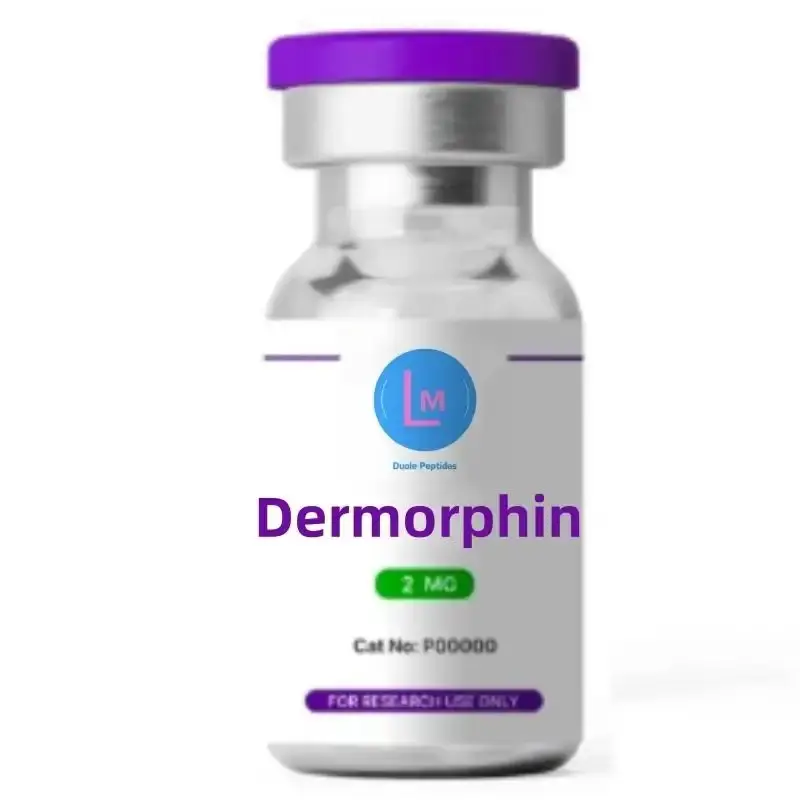
Dermorphin is a powerful opioid peptide found in the skin of South American frogs, known for its potent, long-lasting pain-relieving (analgesic) effects, acting as a strong agonist at mu-opioid receptors. It’s significantly more potent than morphine (up to 200+ times) and contains a rare D-alanine residue, making it a key molecule for developing new pain management drugs with potential applications in medicine, although systemic delivery to the brain remains a challenge.
Key Characteristics
- Origin: Isolated from the skin of frogs from the genus Phyllomedusa.
- Structure: A heptapeptide (seven amino acids long) with the sequence Tyr-D-Ala-Phe-Gly-Tyr-Pro-Ser-NH2.
- Potency: Extremely potent opioid, much stronger than morphine.
- Mechanism: Binds strongly and selectively to mu-opioid receptors (μORs) in the body, producing analgesia.
- Analgesic Effects: Causes powerful, long-lasting pain relief in animal studies.
Research & Potential Applications
- Pain Management: Its high potency makes it a prototype for developing new analgesics, potentially for severe pain.
- Neuroscience: Research explores dermorphin and its analogs for their effects on the central nervous system and endocrine system (affecting hormones like prolactin, growth hormone).
- Drug Delivery: Scientists are developing analogs, like glycopeptide derivatives, to improve its ability to cross the blood-brain barrier for better clinical use.
Reviews
There are no reviews yet.