
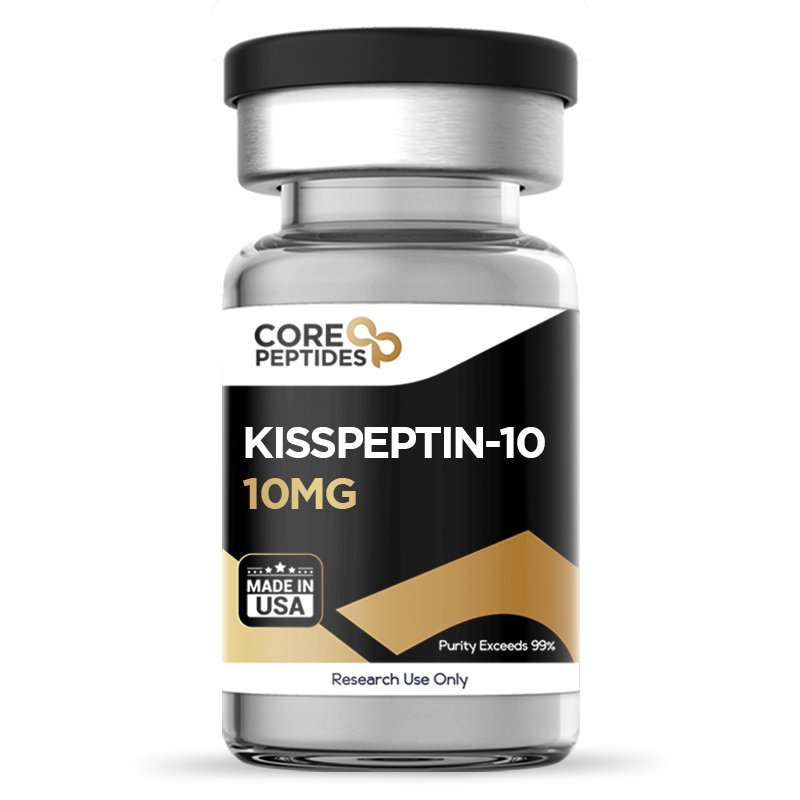
Kisspeptin-10 (KP-10) is a potent biologically active decapeptide (10-amino acid) fragment derived from the KISS1 gene. It is the smallest sequence required to activate the GPR54 (Kiss1r) receptor and serves as a fundamental regulator of the human reproductive system.
Key Biological Roles
- Reproductive Trigger: It stimulates the release of Gonadotropin-Releasing Hormone (GnRH) from the hypothalamus. This action triggers a cascade that increases levels of Luteinizing Hormone (LH) and Follicle-Stimulating Hormone (FSH), which are essential for puberty and fertility.
- Puberty Initiation: Kisspeptin is considered the “master switch” for puberty; inactivating mutations in its receptor can lead to pubertal failure.
- Metastasis Suppression: Originally named metastin, it was first identified for its ability to suppress the spread (metastasis) of melanoma and breast cancer cells.
- Sexual & Emotional Processing: Recent research in 2026 and earlier indicates that KP-10 influences the brain’s limbic system, potentially enhancing sexual desire, arousal, and mood.
Clinical Applications and Research
- Infertility Treatment: It is being studied as a way to restore fertility in women with hypothalamic amenorrhea or as a safer alternative to hCG for triggering egg maturation during IVF.
- HSDD in Men: Research shows KP-10 can modulate sexual brain processing in men with Hypoactive Sexual Desire Disorder (HSDD), increasing behavioral measures of desire.
- Cancer Research: Ongoing studies, including those published in October 2025, investigate its role in suppressing proliferation in aggressive subtypes like triple-negative breast cancer.
- Metabolic Health: It may have “orexigenic” (appetite-stimulating) effects by interacting with hypothalamic neuropeptides like NPY.
Structure and Administration
- Sequence: The human amino acid sequence is H-Tyr-Asn-Trp-Asn-Ser-Phe-Gly-Leu-Arg-Phe-NH2.
- Half-Life: It has a very short plasma half-life—approximately six times shorter than the longer form, Kisspeptin-54—meaning its effects are potent but brief unless infused continuously.
- Availability: In 2026, it remains primarily a research chemical used in clinical trials and laboratory settings.
Reviews
There are no reviews yet.