
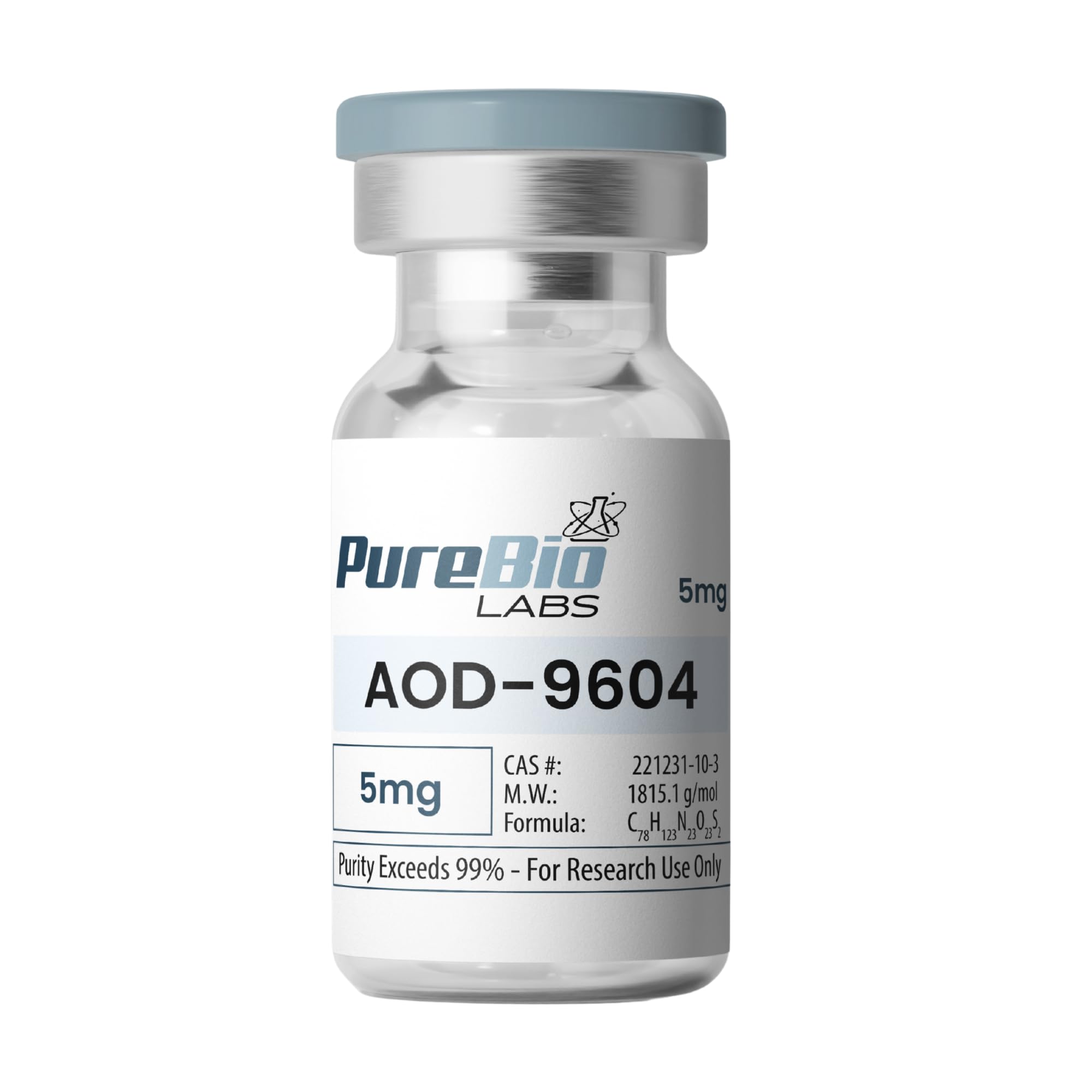
AOD9604 (Advanced Obesity Drug 9604) is a synthetic peptide fragment of human growth hormone (hGH) developed to mimic its fat-burning (lipolytic) effects without causing muscle growth or other side effects like increased insulin resistance, though its efficacy in humans for weight loss remains debated despite promising animal studies and initial trials showing good safety. It’s a 16-amino acid peptide that targets fat metabolism and is used in research, often available online for research purposes, but not FDA-approved as a weight-loss drug, and is banned by the World Anti-Doping Agency (WADA) for athletes.
What it is:
- A modified part of the hGH molecule (amino acids 177-191) with an added tyrosine to stabilize it.
- Designed to stimulate fat breakdown (lipolysis) and inhibit fat storage (lipogenesis).
Key characteristics:
-
Fat Metabolism:Stimulates fat burning and affects body composition.
-
No Growth Effects:Doesn’t increase IGF-1 levels or cause unwanted muscle growth, unlike full hGH.
-
Safety:Showed a good safety profile in human trials, with no negative impact on glucose metabolism or insulin levels, and no antibodies formed.
-
Status:Research chemical, not an approved medical treatment for obesity; development for weight loss was discontinued, but it’s studied for potential bone/cartilage health.
Usage and Status:
- Research Use: Primarily used in research to study fat metabolism.
- Availability: Sold online as a research peptide.
- Anti-Doping: Banned by WADA as a performance-enhancing substance.

Reviews
There are no reviews yet.