
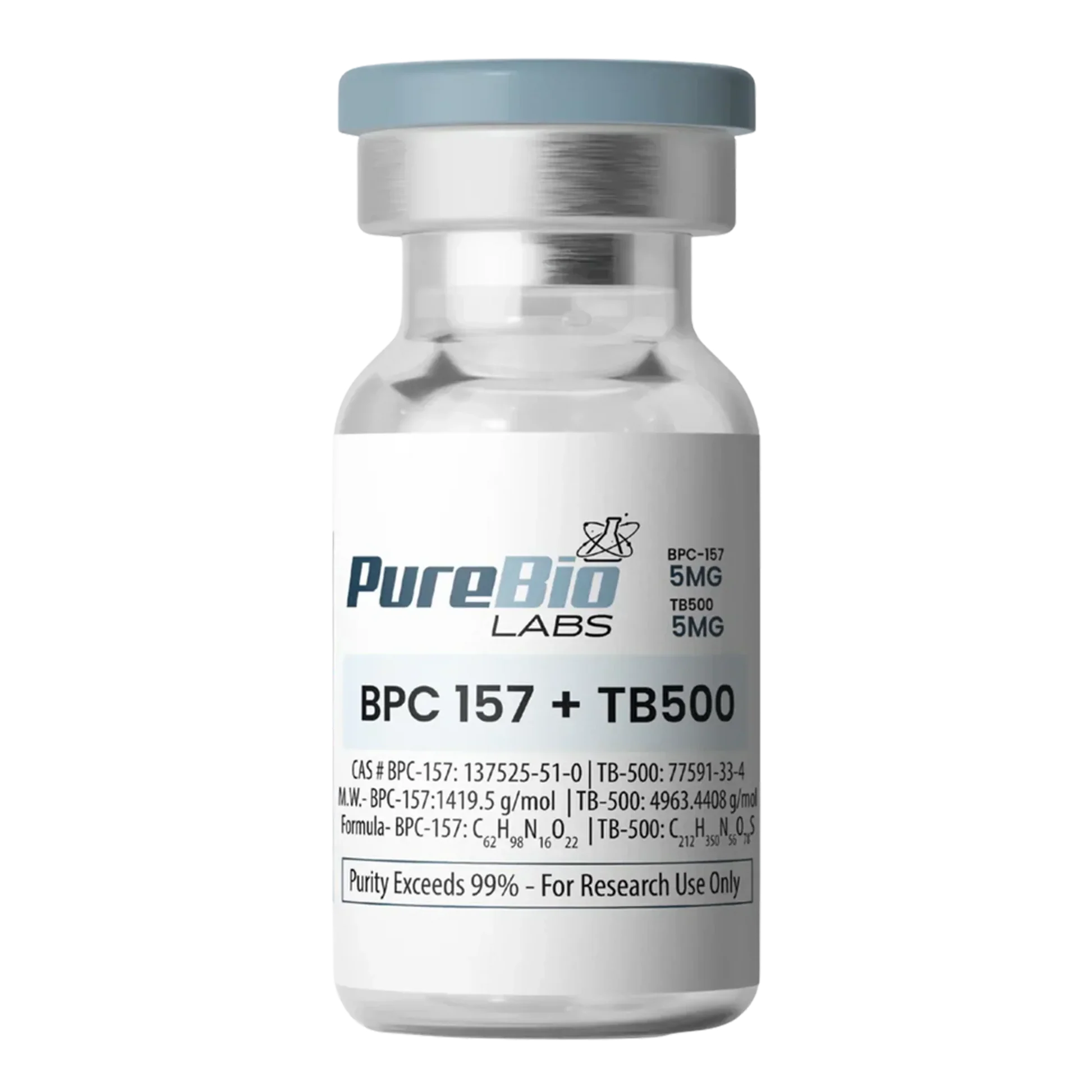
As of 2026, the combination of BPC-157 (5mg) and TB-500 (5mg) remains a popular experimental “stack” in the recovery community, often called the Wolverine Stack.
Potential Synergistic Effects
The two peptides are often paired because they are believed to act through different, complementary pathways to support tissue repair:
- BPC-157 (Body Protection Compound-157): Typically targets localized healing. It is associated with angiogenesis (new blood vessel formation) and collagen synthesis, specifically for tendons, ligaments, and the gut.
- TB-500 (Thymosin Beta-4 Fragment): Believed to act systemically to support broader cell migration and muscle remodeling. It helps immune cells and fibroblasts travel to injury sites more efficiently.
Common Handling and Storage
- Formulation: These are often sold as a lyophilized (freeze-dried) powder in a single vial containing 5mg of each peptide.
- Reconstitution: The powder is mixed with a sterile solvent, such as bacteriostatic water. Solutions should be swirled gently, never shaken, as peptides are delicate.
- Storage: Reconstituted vials must be refrigerated between uses to maintain stability.
2026 Safety and Regulatory Status
- FDA Status: As of 2026, neither BPC-157 nor TB-500 is FDA-approved for human use.
- Compounding Restrictions: The FDA has classified BPC-157 as a “Category 2 Bulk Drug Substance” due to safety concerns, effectively barring licensed compounding pharmacies from preparing it for human consumption.
- Athletic Bans: BPC-157 is explicitly listed as a prohibited substance by the World Anti-Doping Agency (WADA) under the S0 category.
- Clinical Data: While animal studies are extensive, human clinical data remains limited. Potential risks include immune reactions and issues with impurities from unregulated production.
Reviews
There are no reviews yet.